How long does it take to sell a business? The honest answer: most sales take between 6 and 12 months from start to finish. Some close in under five months. Others drag on for over a year. The difference comes down to preparation, the type of business, and how the process is managed.
If you are thinking about selling your company, understanding the realistic timeline is one of the most practical things you can do. Owners who expect a three-month process end up rushing critical steps. Those who plan for 6-12 months make better decisions at every stage — and typically walk away with more money.
This article breaks down the five phases of a business sale, what drives the timeline in each, and how to avoid the delays that derail deals.
The Typical Timeline: 6-12 Months
According to the International Business Brokers Association (IBBA), the average time to sell a privately held business is 6-11 months from listing to close. For mid-market companies (US$5 million to US$100 million in enterprise value), the range is 6-12 months, with cross-border or regulated transactions occasionally extending to 18 months.
Those numbers include only the active sale process — they don’t count the preparation work that happens before a business goes to market. Add 1-3 months of preparation, and the realistic total timeline from “I want to sell” to “the deal is done” is 7-15 months for most businesses.
“The biggest misconception sellers have is about speed,” says Daniel Bae, founder of Amafi and former M&A advisor with over US$30 billion in transaction experience. “They’ve spent 15 or 20 years building their business, but they want to sell it in 90 days. That urgency almost always costs them money.”
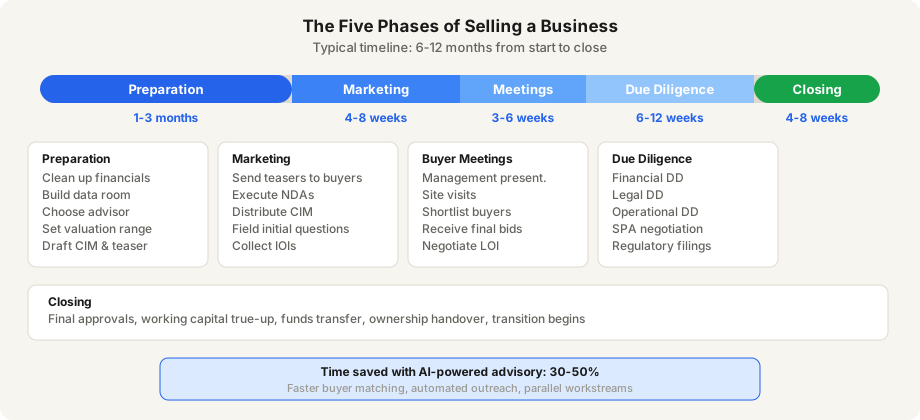
Phase 1: Preparation (1-3 Months)
The preparation phase is invisible to buyers, but it determines everything that follows. This is where you clean up your financials, build a data room, select an advisor, and create the marketing materials that will represent your business to potential acquirers.
What happens in this phase:
- Financial clean-up. Buyers value what they can verify. If your books mix personal and business expenses, lack proper documentation for add-backs, or haven’t been audited, you need to fix that before going to market. Many sellers commission a sell-side quality of earnings report to identify and address issues before buyers find them.
- Data room assembly. You build a virtual data room containing financial statements, customer contracts, employee agreements, IP documentation, and regulatory filings. Having this ready before buyer contact begins shaves weeks off the later due diligence phase.
- Advisor selection. Choosing the right M&A advisor takes 2-4 weeks of interviews, reference checks, and proposal review. The advisor then spends 2-4 weeks preparing your CIM (confidential information memorandum) and teaser. For guidance on this decision, see our article on how to choose an M&A advisor.
- Valuation range. Your advisor establishes a realistic valuation range based on comparable company analysis, EBITDA multiples for your sector, and current market conditions.
Why rushing this phase is a mistake: Sellers who skip preparation and go straight to market pay for it later. Unaudited financials slow down due diligence, incomplete data rooms frustrate buyers, and poor marketing materials fail to attract serious acquirers. According to Bain & Company’s 2024 Global M&A Report, inadequate seller preparation is one of the top reasons private-target deals fail or close at reduced valuations.
Phase 2: Marketing (4-8 Weeks)
Once your advisor has prepared the marketing materials and built a buyer list, the active sale process begins. This phase is about getting your opportunity in front of the right buyers without breaking confidentiality.
What happens in this phase:
- Teaser distribution. Your advisor sends a one-page anonymous summary of your business to a curated list of potential buyers — typically 30-80 for a mid-market deal. The teaser describes the opportunity without revealing your company’s name.
- NDA execution. Interested buyers sign a confidentiality agreement before receiving detailed information.
- CIM distribution. Qualified, NDA-signed buyers receive your full CIM — a 30-60 page document covering your business’s financials, operations, market position, and growth opportunities.
- Initial screening. Buyers review the CIM and submit questions. Your advisor fields inquiries and gauges genuine interest from window-shopping.
- Indications of interest. Serious buyers submit an IOI — a non-binding expression of interest that includes a preliminary valuation range, deal structure outline, and proposed timeline.
Typical duration: 4-8 weeks from first teaser to IOI deadline. Targeted processes (5-15 buyers) move faster than broad auction processes (50+ buyers), though broader processes can generate more competitive tension and higher valuations.
Phase 3: Buyer Meetings (3-6 Weeks)
This is the phase where you meet the buyers face to face, and where they decide whether your business is worth the price reflected in their IOI. It is also when competitive dynamics peak — multiple interested buyers create urgency and drive better terms.
What happens in this phase:
- Management presentations. You and your team present directly to shortlisted buyers (typically 3-7). These are structured meetings where buyers ask detailed questions about operations, customers, growth plans, and risks.
- Site visits. Some buyers, particularly strategic buyers, want to see your facilities, meet key employees, and observe operations firsthand.
- Final bids. After management presentations, buyers submit binding or near-binding offers — often more detailed and higher than their initial IOI, because they’ve had direct access to you and your team.
- LOI negotiation. You select a preferred buyer and negotiate the letter of intent — a document that outlines the key deal terms including price, structure, timeline, and exclusivity period.
What can slow this phase down: Scheduling management presentations across multiple buyers and time zones takes coordination. If you’re selling to international or cross-border buyers, cultural norms around relationship building can add weeks. Japanese acquirers, for example, are known for thorough, methodical processes that require more meetings before committing.
Phase 4: Due Diligence (6-12 Weeks)
Due diligence is the phase that makes or breaks most deals. This is where the buyer’s team — accountants, lawyers, and operational experts — examines every aspect of your business to verify what you’ve represented and identify risks.
What happens in this phase:
- Financial due diligence. The buyer’s accounting team reviews your financial statements, tax returns, revenue recognition, working capital trends, and EBITDA adjustments. They are looking for anything that doesn’t match the CIM.
- Legal due diligence. Lawyers review contracts, litigation history, regulatory compliance, intellectual property, and corporate governance documents.
- Operational due diligence. The buyer examines customer concentration, employee retention, technology infrastructure, and supply chain dependencies.
- SPA negotiation. While due diligence runs, your legal team negotiates the share purchase agreement (or asset purchase agreement) with the buyer’s lawyers. This covers reps and warranties, indemnification, closing conditions, and working capital adjustments.
- Regulatory filings. If the deal requires antitrust approval, foreign investment review, or industry-specific regulatory clearance, those filings happen during this phase.
Why this phase takes longest: Due diligence uncovers questions, and every question generates follow-up requests. A single issue — an undisclosed customer contract, an unexpected tax liability, an employee dispute — can add 2-4 weeks while both sides assess the impact and negotiate adjustments.
Sellers who prepared thoroughly in Phase 1 move through due diligence faster. A well-organized data room with pre-loaded documents means the buyer’s team gets answers in hours, not weeks.
Phase 5: Closing (4-8 Weeks)
The final phase covers everything between signing the definitive agreement and actually transferring ownership and funds. It’s more administrative than strategic, but it requires careful coordination.
What happens in this phase:
- Closing conditions. Both sides satisfy any remaining conditions — regulatory approvals, third-party consents, financing confirmations.
- Working capital true-up. The final working capital figure is calculated and compared to the agreed target, with adjustments to the purchase price accordingly.
- Funds transfer. The buyer wires the purchase price (minus any escrow or holdback amounts) to the seller. Earnout arrangements, if any, are documented separately.
- Ownership handover. Shares or assets transfer. The seller begins any transition period specified in the transition services agreement.
What Affects the Timeline
Not every business sale takes the same amount of time. Five factors have the biggest impact on whether your process lands closer to 6 months or 12.
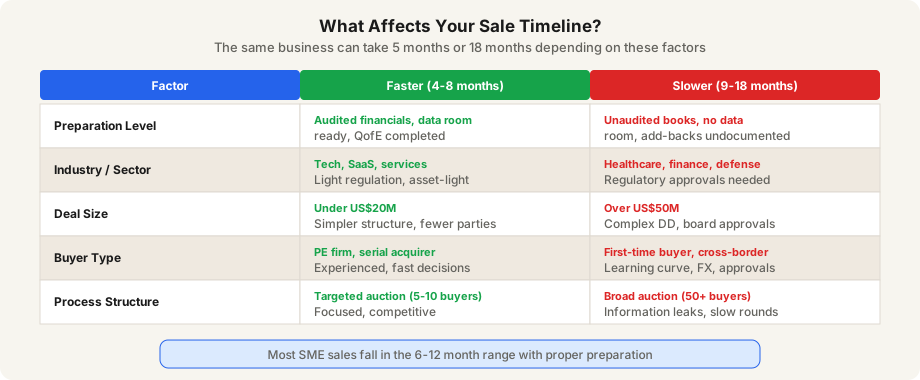
1. Preparation level. This is the single biggest variable. A business with audited financials, a pre-built data room, and a completed QofE can move through the process 30-40% faster than one that starts from scratch. If you only take one thing from this article: prepare before you go to market.
2. Industry and regulation. Businesses in lightly regulated sectors (technology, professional services, consumer products) typically sell faster than those in heavily regulated industries (healthcare, financial services, defense). Regulatory approvals alone can add 2-6 months to a timeline.
3. Deal size. Smaller transactions (under US$20 million) involve fewer parties, simpler structures, and faster decisions. Larger deals require more extensive due diligence, board-level approvals, and sometimes regulatory filings that don’t apply to smaller transactions.
4. Buyer type. Private equity firms and serial acquirers move fast — they have established processes, pre-approved financing, and teams that evaluate dozens of deals per year. First-time buyers, family offices, or international acquirers learning a new market tend to take longer.
5. Process structure. A focused auction with 5-15 targeted buyers typically closes faster than a broad auction with 50+ parties. The broad approach generates more interest but also more complexity, more buyer questions, and more scheduling challenges.
Common Delays and How to Avoid Them
Even well-run processes encounter delays. Here are the most frequent ones and what you can do about them.
Buyer financing falls through. The buyer’s funding source (bank, PE sponsor, or personal wealth) doesn’t come through. To mitigate this, your advisor should verify proof of funds or financing commitment letters before granting exclusivity. Don’t take your business off the market for a buyer who can’t show the money.
Seller indecision. Many owners experience cold feet or second thoughts mid-process. This is natural — you’re selling your life’s work. But pausing the process for weeks while you “think about it” signals uncertainty to buyers and weakens your negotiating position. Make your decision before you launch.
Key employee departures. If a critical employee leaves during the sale, buyers reprice the deal or walk away. Lock in key people with retention agreements before going to market. Address this in Phase 1, not as an afterthought.
Diligence surprises. Issues that surface during due diligence — undisclosed liabilities, customer concentration, pending litigation — create delays and often lead to price reductions (known as retrade). The best defense is a vendor due diligence process that finds these issues before buyers do.
Regulatory timelines. Some approvals simply take as long as they take. If your business requires competition authority review, foreign investment approval (such as FIRB in Australia or similar bodies), build that timeline into your plan from the start.
How AI-Powered Advisory Shortens the Timeline
Technology is changing the speed equation for business sales. AI-powered tools now handle work that used to take advisors weeks to complete manually.
Buyer identification and matching. Traditional buyer search involves manually researching potential acquirers, building spreadsheets, and making cold calls. AI-powered matching can identify and rank hundreds of qualified buyers in hours based on acquisition history, sector focus, deal size preferences, and strategic fit. What used to take 3-4 weeks can happen in days.
Document preparation. Generating a CIM used to require 2-3 weeks of analyst work. AI-assisted document generation can produce a first draft in hours, freeing your advisor to focus on strategy and positioning rather than formatting and writing.
Buyer outreach. Personalised outreach to 50+ potential buyers, each receiving a tailored message explaining why your business fits their strategy, used to be a week-long manual process. AI-powered outreach automates the personalisation while maintaining quality.
This is the approach we’ve taken at Amafi — using AI to compress the time-intensive parts of the sale process so that business owners and their advisors spend less time on mechanics and more time on the strategic decisions that determine deal outcomes.
The time savings are real. Across the process, firms using AI-powered advisory tools report 30-50% reductions in total process duration, according to McKinsey’s State of AI report. The improvement comes not from cutting corners, but from eliminating manual work that added time without adding value.
Why Rushing Is Still a Mistake
Even with AI shortening the administrative timeline, the strategic work still takes as long as it takes. You cannot rush buyer relationship-building. You cannot accelerate regulatory approvals. And you should never skip preparation to save a month — because poor preparation costs far more in the final deal price.
The owners who achieve the best outcomes are those who plan for a 6-12 month process, invest heavily in preparation, and then use every available tool — including AI-powered advisory — to execute the process as efficiently as possible.
For a detailed preparation framework, see our comprehensive guide on selling a business. And if you want to understand the mistakes that cost sellers the most money, read 7 costly mistakes when selling your business.
Thinking about selling your business? Start with a realistic timeline and a clear plan. Book a valuation meeting to understand what your business is worth, or take the Exit Readiness Assessment to see how prepared you are to go to market. Amafi helps business owners navigate every phase of the sale — from preparation through closing — with AI-powered advisory that saves time without cutting corners.

About the Author
Daniel Bae
Co-founder & CEO, Amafi
Daniel is an investment banker with 15+ years of experience in M&A, having advised on deals worth over US$30 billion. His career spans Citi, Moelis, Nomura, and ANZ across London, Hong Kong, and Sydney. He holds a combined Commerce/Law degree from the University of New South Wales. Daniel founded Amafi to solve the pain points in M&A, enabling bankers to focus on what matters most — delivering trusted advice to clients.
About Amafi
Amafi is an M&A advisory firm built for Asia Pacific. We help business owners sell their companies and corporate teams make strategic acquisitions — with bulge bracket execution quality at lower fees, powered by AI and a network of senior dealmakers.
Learn about selling your businessGet M&A insights delivered
AI-powered deal sourcing strategies, market analysis, and Asia Pacific insights — straight to your inbox.